The Narlıkuyu Museum—a tiny treasure trove of Roman mosaics on the coast of Cilicia
The Narlıkuyu Museum (Narlıkuyu Mozaik Müzesi) is a compact yet extraordinarily valuable archaeological pavilion located in the seaside village of the same name in the Silifke district of Mersin Province. Opened in 1976, it is built directly over 4th-century AD Roman baths and preserves, in its original location, the famous “Three Graces” mosaic—one of the finest examples of late antique mosaic art in modern-day Turkey. Despite its modest size, this museum is a must-see stop on the way from Mersin to Alanya, especially for travelers interested in the history of the province of Cilicia and the Roman heritage of the Mediterranean coast. Here, just a few meters from the beach and seafood taverns, lies a floor mosaic that has preserved the faces of ancient goddesses and the words of an ancient Greek inscription for two thousand years.
History and Origin
The village of Narlykuyu, which translates from Turkish as “Pomegranate Well,” is located in a picturesque bay on the Mediterranean coast, about 20 kilometers east of Silifke. In antiquity, this region was part of Cilicia Trachea (Rocky Cilicia)—a mountainous coastal province of the Roman Empire renowned for its pirates, fabulous landscapes, and sanctuaries. The site itself gained fame thanks to a spring of pure fresh water gushing right by the sea; the Romans called it the Calliroi Spring and believed that the water prolonged youth and beauty for those who drank it.
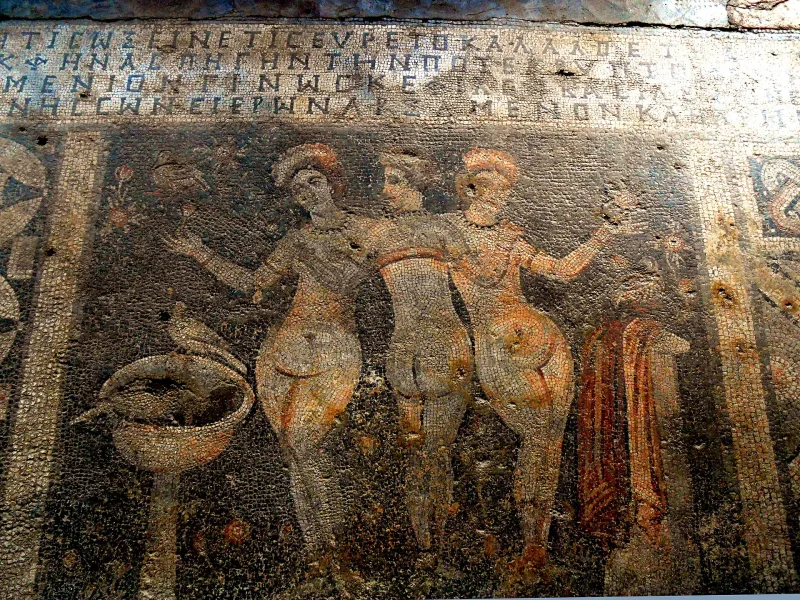
In the 4th century CE, during the reign of the Poemian brothers, small thermal baths—public baths serving passing travelers and local residents—were built on this site. The floor of the main hall was paved with a magnificent mosaic dedicated to the Three Graces—Aglaea (Radiant), Euphrosyne (Joyful), and Thalia (Flourishing), companions of Aphrodite who personified beauty, grace, and joy. The mosaic was accompanied by a Greek inscription praising the builders of the baths. After silting up and the gradual destruction of the baths, the mosaic was buried under a layer of earth and was accidentally discovered by local residents in the first half of the 20th century.
Systematic excavations and restoration were carried out in the 1960s and early 1970s under the auspices of the Turkish Ministry of Culture. In 1976, a protective pavilion was erected over the preserved mosaic, which became an official museum. Since then, Narlykuyu has remained one of the few places in the world where an ancient Roman mosaic can be viewed exactly where it was laid sixteen centuries ago, without being moved to a museum in the capital.
Architecture and What to See
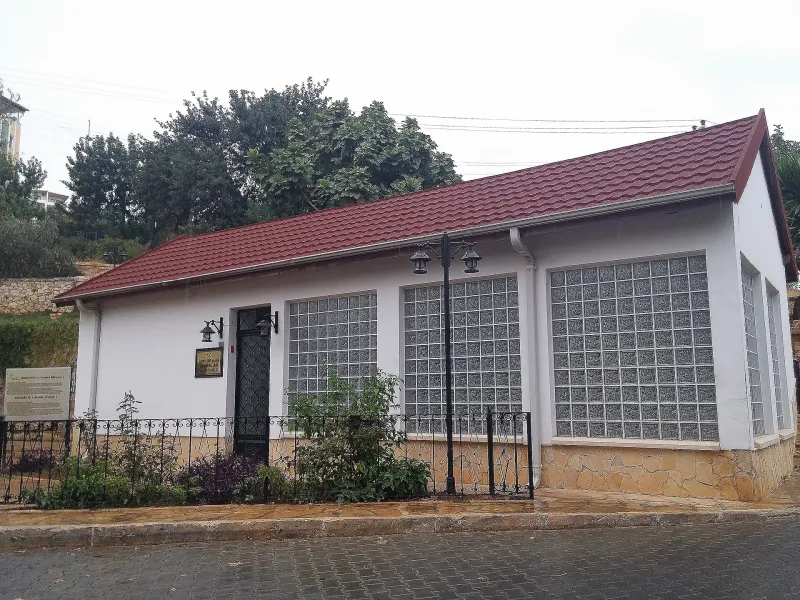
The Narlykuyu Museum is a compact pavilion-style building designed to preserve a single, yet outstanding, archaeological site. Architecturally, it is modest and functional: a low, rectangular structure with a gabled roof that protects the mosaic floor from the sun, rain, and salt in the sea air. Inside, wooden walkways and glass railings have been installed so that visitors can examine the composition in every detail without stepping on it.
The “Three Graces” mosaic is the main exhibit
The central composition covers approximately 4 square meters and is made of small tesserae in all shades of Mediterranean stone—cream, ochre, dark brown, black, coral red, and gray-blue. The Three Graces are depicted in the classical style: three nude young women stand embracing one another, two of them looking forward, while the one in the middle turns her back to the viewer. This iconography, dating back to Hellenistic sculpture, is repeated in dozens of Roman and Byzantine works, but it is the Narlikuy version that stands out for the liveliness of the faces, the softness of the lines, and the subtlety of the half-tones. The artist used tiny tesserae measuring just 3–5 millimeters, which allowed him to convey the individuality of each figure.
Greek inscription and figures of builders
Next to the central composition are two smaller but no less interesting scenes. The first depicts two men in tunics standing next to the statue; they are believed to be the brothers and governors Poemenii, with whose funds the baths were built. The second scene is a poetic inscription in ancient Greek, praising the builders and mentioning the Calliroi spring. This inscription is the most important epigraphic monument of early-library poetry in Cilicia and is cited in all reference works on the region’s late-antique literature.
Artifacts and Context
In addition to the mosaic itself, the museum features small display cases with artifacts found during the excavations: ceramic fragments, bronze household items, Roman lamps, and coins from the 4th–6th centuries. All exhibits are labeled in Turkish and English. Special attention should be paid to the display featuring a hypothetical reconstruction of the baths’ interior: it helps visitors understand what the hall looked like, the floor of which was covered by the mosaic.
The Calliroi Spring and Surroundings
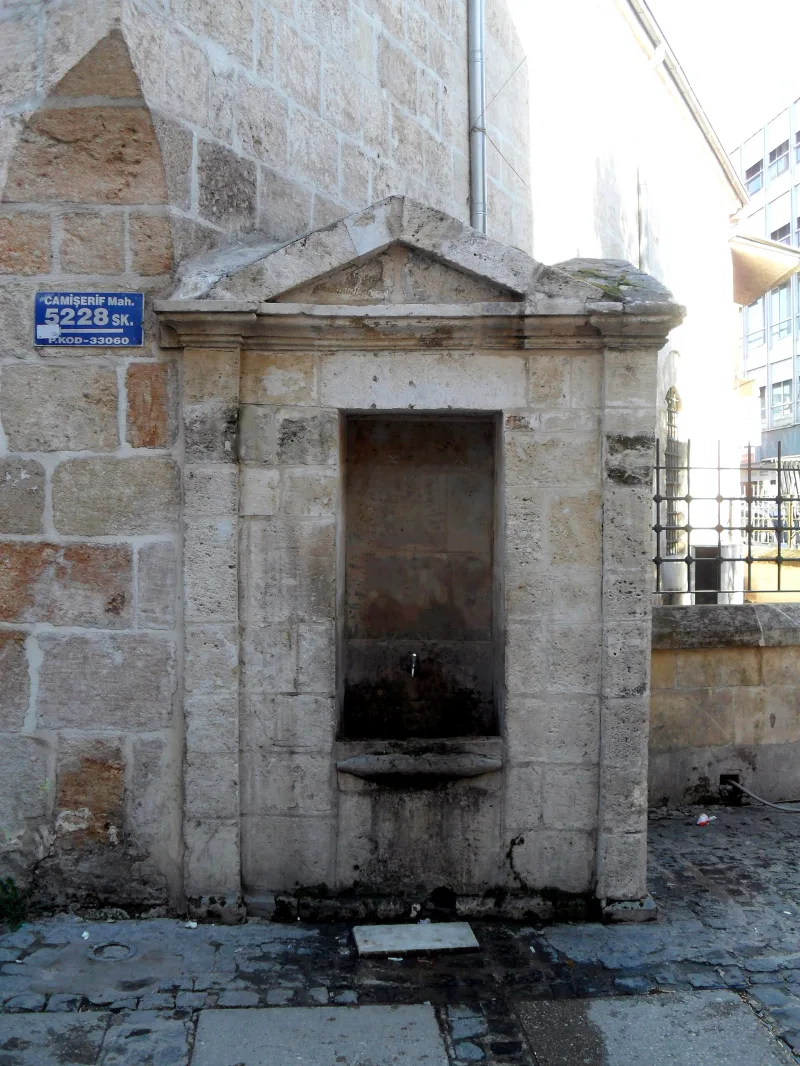
Right next to the museum, an ancient freshwater spring continues to flow underground, having supplied the baths for centuries. Locals claim that the water is particularly cold and pure; a small stone pavilion allows tourists to fill bottles with it. From the museum, it’s a two-minute walk to the miniature Narlykuyu Embankment, with wooden walkways over the clear water and dozens of open-air seafood restaurants serving freshly caught mullet, sea bream, and shrimp.
Kenik Cave and the Heaven and Hell Sinkholes
Two kilometers from the museum lie the famous geological sinkholes—the Jennet ve Cennet (Heaven and Hell) caves. These are massive karst sinkholes in a limestone massif, at the bottom of one of which an early Christian chapel from the 5th century has been preserved. According to legend, it was here that Zeus imprisoned the monster Typhon, who had attempted to overthrow the Olympian gods. Many travelers combine a visit to the museum with a tour of the caves—the distance allows for this to be done in half a day.
Interesting Facts and Legends
- The Calliroi Spring is mentioned by the ancient geographers Strabo and Pomponius Mela as the “healing waters of Cilicia,” said to aid in treating stomach ailments and bestowing beauty.
- The “Three Graces” mosaic from Narlykuyu is considered one of the earliest examples in Asia Minor of a detailed portrait depiction of mythological figures with such individualized faces.
- Poemen, mentioned in the inscription, was the governor of Isauria and Cilicia and is known from several epigraphic monuments in the region; some researchers identify him with the eponymous correspondent in Symmachus’s letters.
- In local folklore, the water from the Narlykuyu spring is still called the “elixir of youth,” and many elderly villagers come here daily.
- Excavations in the 1960s were conducted by archaeologist Hüseyin Yolalan, whose reports remain the primary source of information about the site.
- The full name of the sinkholes near the museum is “Cennet ve Cehennem,” which translates to “Heaven and Hell”; the depth of “Hell” exceeds 120 meters, and only climbers with equipment can descend there.
- Turkish historical series and documentaries about Roman Cilicia were regularly filmed in Narlykuyu—the mosaic appeared on screen as a “backdrop” for imperial bath scenes.
How to get there
Narlykuyu is located on the D400 highway, which runs along the Mediterranean coast from Mersin to Alanya. The distance from Mersin is about 75 kilometers (approximately 1 hour and 15 minutes by car), from Silifke—22 kilometers (25 minutes), and from Antalya—about 350 kilometers (5–6 hours).
The most convenient option is a private or rental car: the road is scenic and runs along cliffs, coves, and beaches. Municipal buses and dolmuşes run several times a day from Mersin and Silifke to the village of Narlykuyu; the stop is a five-minute walk from the museum. The nearest airports are Adana Şakirpaşa (ADA, about 150 km) and Gazipaşa-Alanya (GZP, about 240 km). Parking near the museum is free, and there are usually enough spaces even during peak season. If you’re traveling on a cruise ship calling at Mersin, you can reach Narlykuyu in an hour by taxi.
Tips for travelers
It takes about 30–45 minutes to tour the museum; you should allow the same amount of time for a walk around the bay and lunch at one of the taverns. The best time to visit is spring (April–May) and fall (September–October), when the heat subsides but the sea remains warm enough for swimming. In the summer, especially in July–August, we recommend arriving in the morning (the museum usually opens at 9 :00) or closer to sunset to avoid the peak heat and tour groups.
The ticket office accepts Turkish lira in cash and credit cards; Müzekart+ is accepted—an annual pass for museums in Turkey that pays for itself after visiting 5–7 sites. Inside the pavilion, it’s cool thanks to the thick walls and shade; photography without a flash is permitted. Keep in mind that the walkways are narrow and not wheelchair-accessible; elderly visitors are advised to wear comfortable shoes, as there are several steps in the hall.
Combine your trip to Narlikuyu with visits to nearby attractions: the Cennet ve Cennet caves (10 minutes by car), the ancient city of Korikos with its famous Kizkalesi Sea Fortress (15 minutes), the ruins of Aya-Fekla (25 minutes), as well as the fortress and castle of Silifke. A full “Roman Cilicia in a Day” itinerary includes all these sites with lunch in Narlykuyu. On the way back, be sure to try the local grilled fish, fig lemonade, and dondurma (Turkish ice cream with a stretchy consistency). Fill a bottle with water from the Kalliroi spring—it may not be the “elixir of youth,” but you’ll hardly find anywhere else to drink such cool, clear water of ancient origin.